By MICE Bhutan / Posted on 30 September, 2026 16:57
For corporate groups travelling to Bhutan, some of the most memorable moments do not happen in conference rooms or hotel ballrooms.
They happen when people create something together, learn from local communities and experience Bhutanese culture in a way that feels personal.
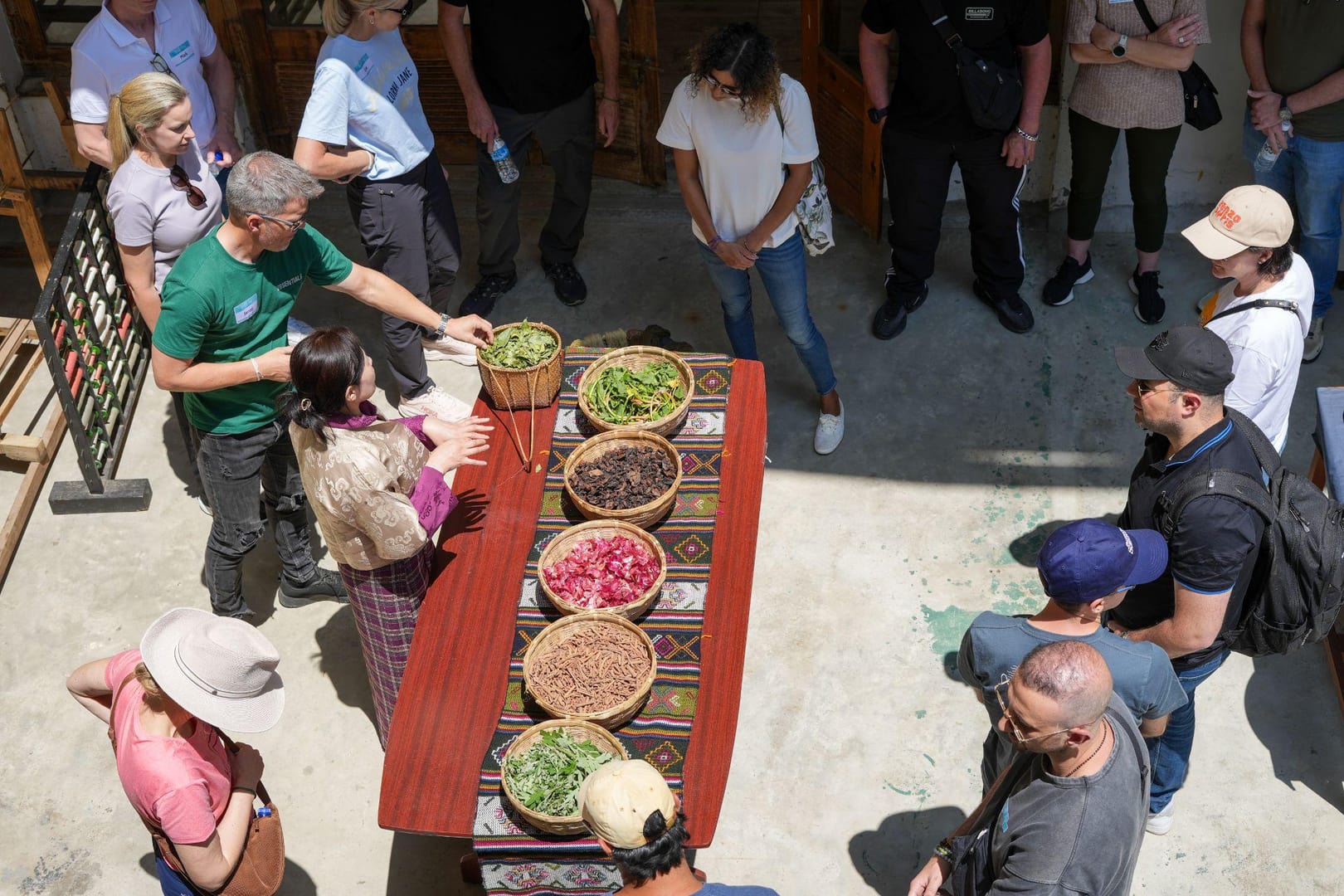
A natural dye workshop hosted by DrukVana for a group of 45 guests from MICE Bhutan on 24 April 2026 offers a good example of how cultural experiences can become meaningful additions to a corporate or incentive programme in Bhutan.
Rather than simply observing Bhutanese textile traditions, participants became part of the process. They worked with natural dyes, experimented with yarn dyeing and tie dye techniques, interacted with local hosts and eventually joined a traditional Bhutanese dance.
The result was more than an afternoon activity. It demonstrated how thoughtfully designed cultural experiences can encourage connection, creativity and engagement within corporate groups.
For organisations planning incentive trips and team building programmes in Bhutan, experiences like this can add a distinctly Bhutanese dimension to the journey.
Traditional sightseeing remains an important part of any visit to Bhutan, but corporate groups can often gain more from experiences that invite active participation.
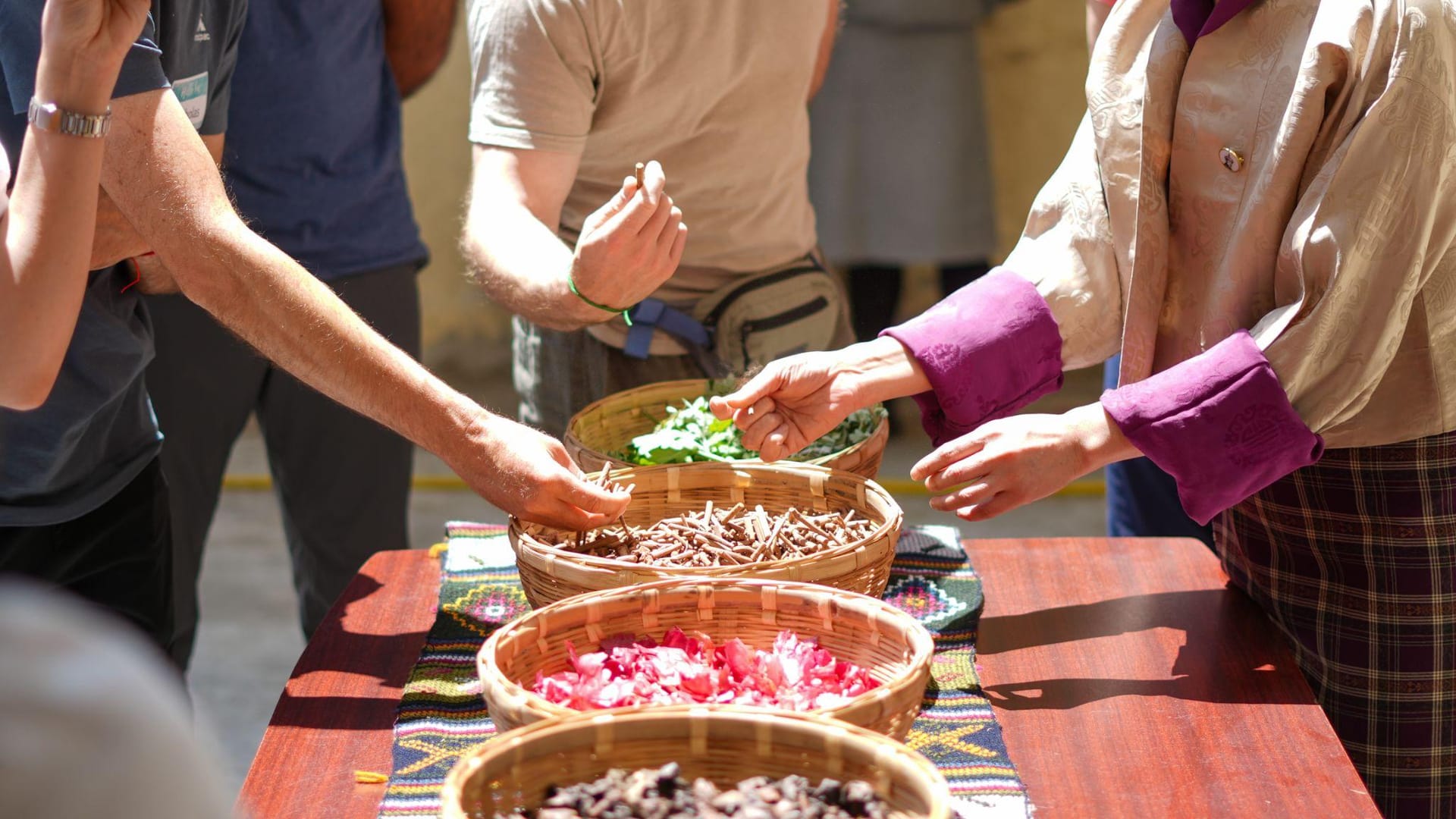
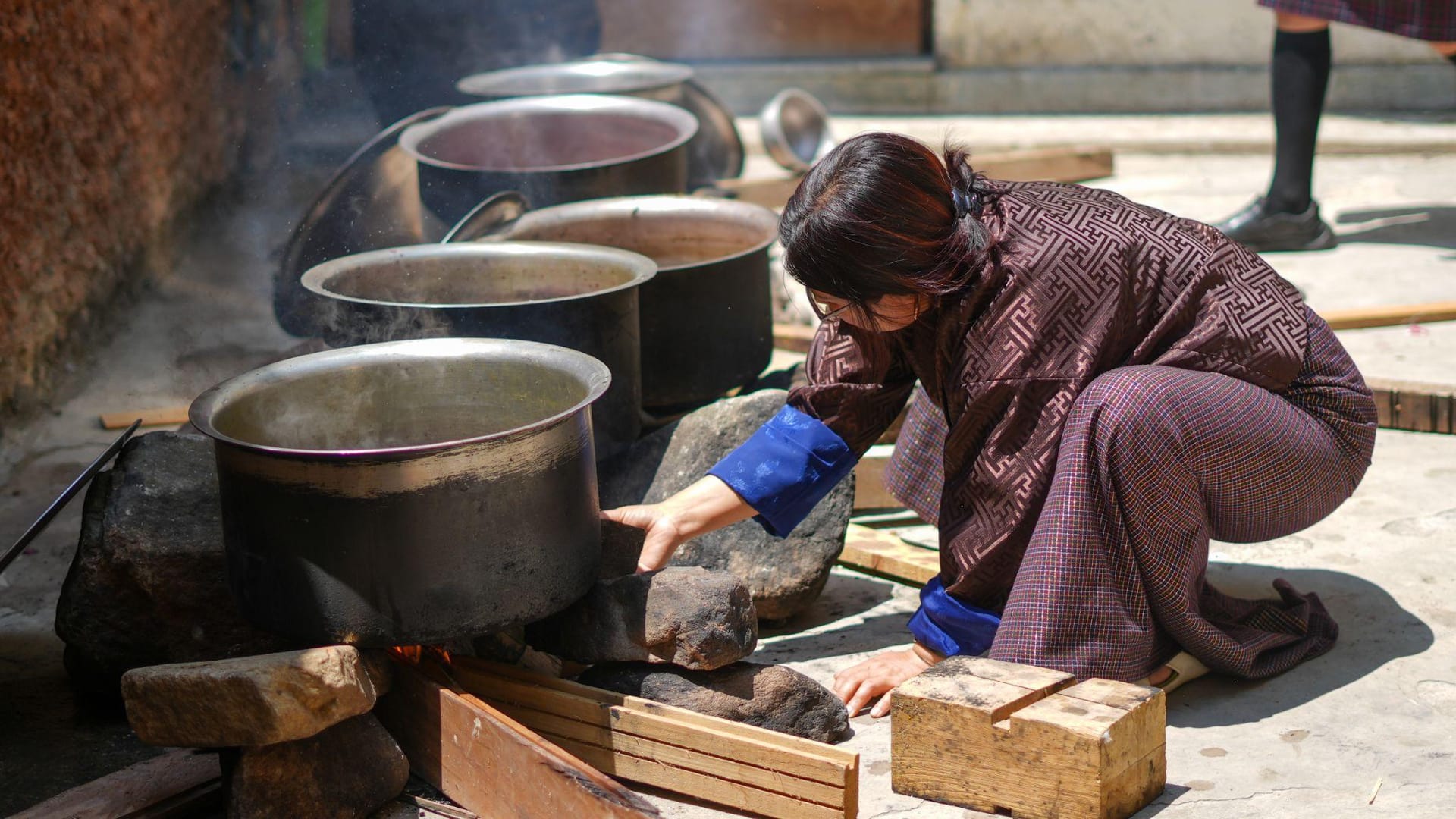
At DrukVana, natural dyes were prepared in advance so participants could begin experimenting almost immediately.
Guests explored different bindings, patterns and dyeing techniques, creating their own textile pieces using natural materials.
The activity introduced participants to Bhutan's textile heritage while demonstrating how traditional knowledge and sustainable practices remain relevant today.
For MICE planners, this participatory format has an important advantage.
Instead of simply listening to an explanation, participants learn by doing.
They touch the materials, make creative decisions, experiment with techniques and see the results of their choices.
That creates a much stronger personal connection with the experience and the destination.
Not every meaningful team experience needs to involve competition.
Creative activities provide a different environment for colleagues to interact.
During a workshop such as natural dyeing, conversations happen naturally as participants compare patterns, exchange ideas and observe what others are creating.
Someone who may speak very little during a formal meeting can become highly engaged while experimenting with a design. Colleagues from different departments or markets may find themselves sharing ideas while working alongside one another.
This makes creative cultural workshops particularly suitable for incentive programmes, leadership retreats and corporate gatherings where strengthening relationships is an important objective.
It also reflects a broader principle when planning a corporate retreat in Bhutan. The destination should not simply provide the backdrop. Bhutan itself can become part of the experience.
Sustainability is increasingly part of corporate travel conversations, but it can sometimes remain an abstract concept.
A natural dye workshop turns the idea into something participants can see and experience.
Guests learn how natural materials can be transformed into colour and gain an appreciation for practices connected to traditional Bhutanese textile making.
Rather than discussing sustainability only through presentations or corporate statements, participants encounter it through a practical cultural activity.
There can also be a wider impact.
Thoughtfully designed corporate experiences can direct spending towards artisans, cultural practitioners, communities and organisations working to preserve traditional knowledge.
This connects closely with the idea of purpose led incentive travel in Bhutan, where the experience creates value not only for participants but also for the people and places involved in hosting them.
The most memorable part of a cultural experience is often not the scheduled activity itself.
It is what happens around it.
During the DrukVana programme, the experience eventually expanded beyond textile making when the team presented a traditional dance.
The guests joined in.
What began as a workshop became a shared moment of music, movement and laughter.
For participants visiting Bhutan from overseas, these spontaneous interactions can become some of the strongest memories of the journey.
They create a sense of connection that is difficult to achieve through observation alone.
A cultural experience becomes especially powerful when participants feel that they are being welcomed into something rather than simply watching it.
Corporate team building is often associated with games, physical challenges or competitive activities.
Bhutan offers another possibility.
Culture itself can become the setting for connection.
Depending on the objectives and interests of the group, a programme might include experiences such as:
The objective does not necessarily have to be competition.
The shared experience becomes the team building activity.
Participants discover something new together, step outside their normal working environment and return with a story that belongs to the group.
For planners considering cultural activities in Bhutan, several principles can make the experience more meaningful.
Make it participatory
Give participants something meaningful to do rather than asking them to remain observers throughout the programme.
Provide cultural context
Explain the significance of the craft, tradition or activity so participants understand its place within Bhutanese culture.
Make the experience accessible
Activities should accommodate different levels of physical ability, confidence and previous experience.
Allow time for conversation
Some of the most valuable interactions happen between the scheduled elements of the programme.
Avoid making every minute feel programmed.
Connect the activity to Bhutan
The strongest experiences are difficult to replicate elsewhere.
A corporate activity in Bhutan should ideally help participants understand something about Bhutanese culture, communities, environment or philosophy.
Include local voices
Whenever possible, give artisans, hosts and community members the opportunity to explain their own traditions, knowledge and practices.
These considerations are especially important when planning a corporate event in Bhutan. The strongest programmes begin with the purpose of the gathering and then select experiences that support that objective.
A successful MICE programme is not defined only by meeting facilities, accommodation and logistics.
It is also shaped by what participants remember when they return home.
They may forget the exact sequence of a presentation.
They are far more likely to remember the afternoon when they dyed yarn using natural colours, attempted a Bhutanese dance with their colleagues or sat beside a local artisan learning a traditional craft.
These moments give a corporate journey emotional depth.
They also give colleagues something to talk about long after the programme has ended.
For companies planning incentive trips, leadership retreats, conferences or corporate gatherings in Bhutan, thoughtfully chosen cultural activities can transform an itinerary from a business trip into a genuinely shared experience.
In Bhutan, that opportunity extends far beyond the meeting room.
