
By MICE Bhutan / Posted on 26 August, 2026 10:43
Planning a corporate event in Bhutan is different from organising one in Singapore, Bangkok or another major convention destination.
There are fewer international flights. Venue and hotel capacity requires more careful coordination. Delegates need the appropriate travel documentation. And moving a large group between Bhutan's mountain valleys requires realistic scheduling.
None of this should discourage you.
It simply means the planning needs to start in the right order.
Here is how to approach it.
Don't start with the hotel.
Start with the objective.
Are you organising:
Then ask what you want delegates to take away from the experience.
This determines everything from destination and venue to activities and programme length.
Group size has an unusually important influence on event planning in Bhutan.
A 20 person executive retreat can choose from a broad selection of boutique and luxury properties.
A 200 person conference requires a different approach to venues, accommodation, transportation and dining.
For very large events, you may need several hotels and a coordinated fleet of vehicles.
Establish realistic delegate numbers as early as possible.
Thimphu
Usually the strongest option for conferences, corporate meetings and events requiring more substantial infrastructure.
Paro
Excellent for incentive groups, premium corporate events and executive retreats, with the added convenience of proximity to the international airport.
Punakha
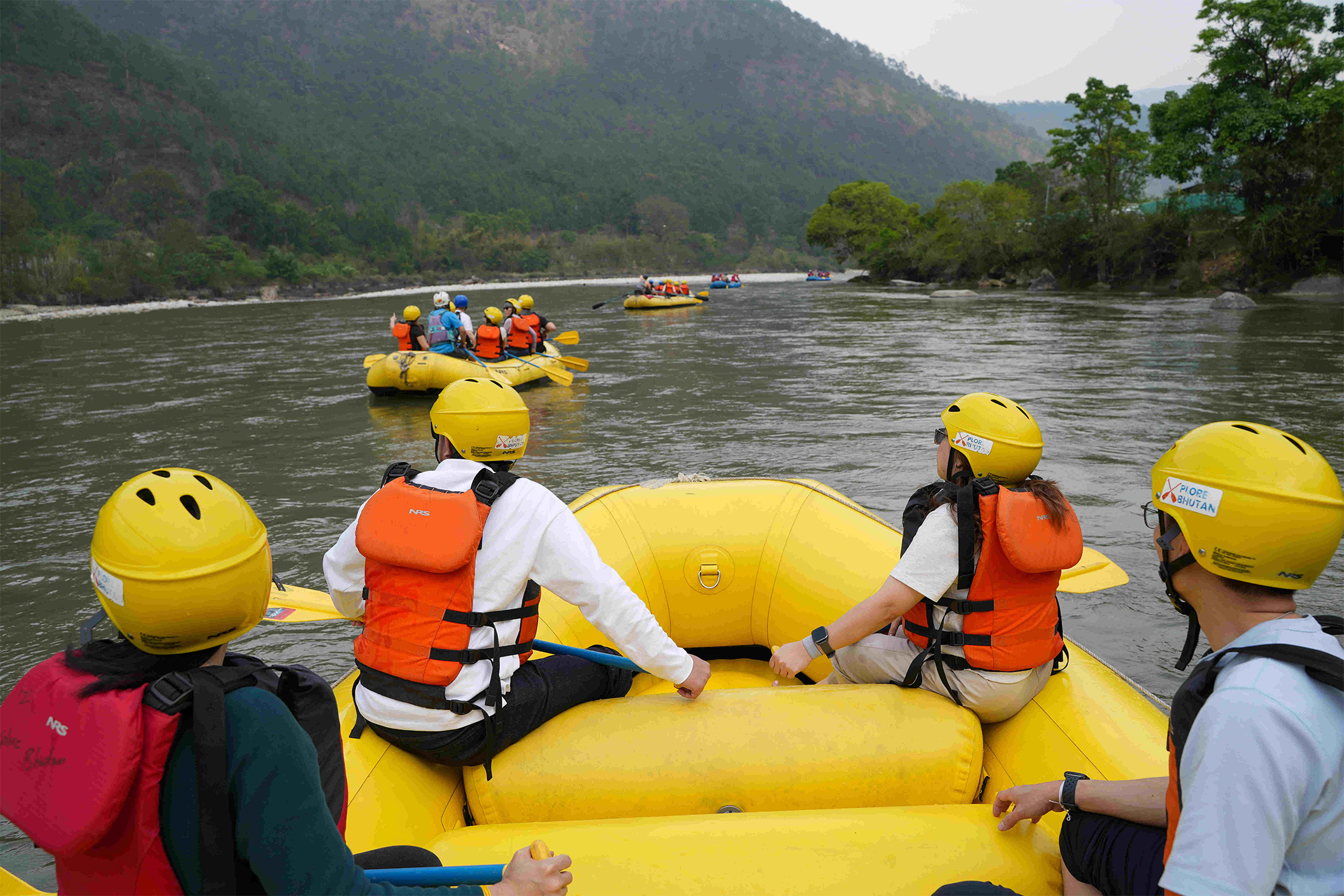
Particularly suitable for retreats and incentive experiences involving nature, rafting and culture.
A programme does not have to stay in one place.
For example, you might hold the main conference in Thimphu before moving delegates to Paro for team experiences and a closing celebration.
This is one of the most important differences when planning Bhutan.
Do not build an entire event programme and only then investigate flights.
Bhutan's international flight capacity is more limited than major regional hubs.
For larger groups, flight availability can influence the event dates, arrival pattern and even programme structure.
Delegates coming from multiple countries may need to arrive through different gateways or on different services.
MICE Bhutan can coordinate flight bookings and itinerary management as part of its corporate event services.
Venue and accommodation planning should happen simultaneously.
Ask:
Thimphu currently offers options ranging from hotel meeting facilities to the Royal Institute of Management, whose auditorium has a capacity for up to 3,000 attendees.
Most international delegates will require the appropriate visa arrangements before travelling to Bhutan.
For corporate groups, it is considerably easier to coordinate delegate information centrally rather than leaving everyone to manage the process individually.
Build document collection into your event timeline.
MICE Bhutan provides visa assistance as part of its corporate event services.
Bhutan's Sustainable Development Fee can represent a substantial cost for larger groups.
Qualifying MICE events may be eligible for an SDF waiver for up to five nights, subject to the prevailing criteria and approval.
Current published requirements include a minimum of 15 eligible participants, excluding organisers, speakers and hosts.
Check potential eligibility early rather than assuming that every corporate group automatically qualifies.
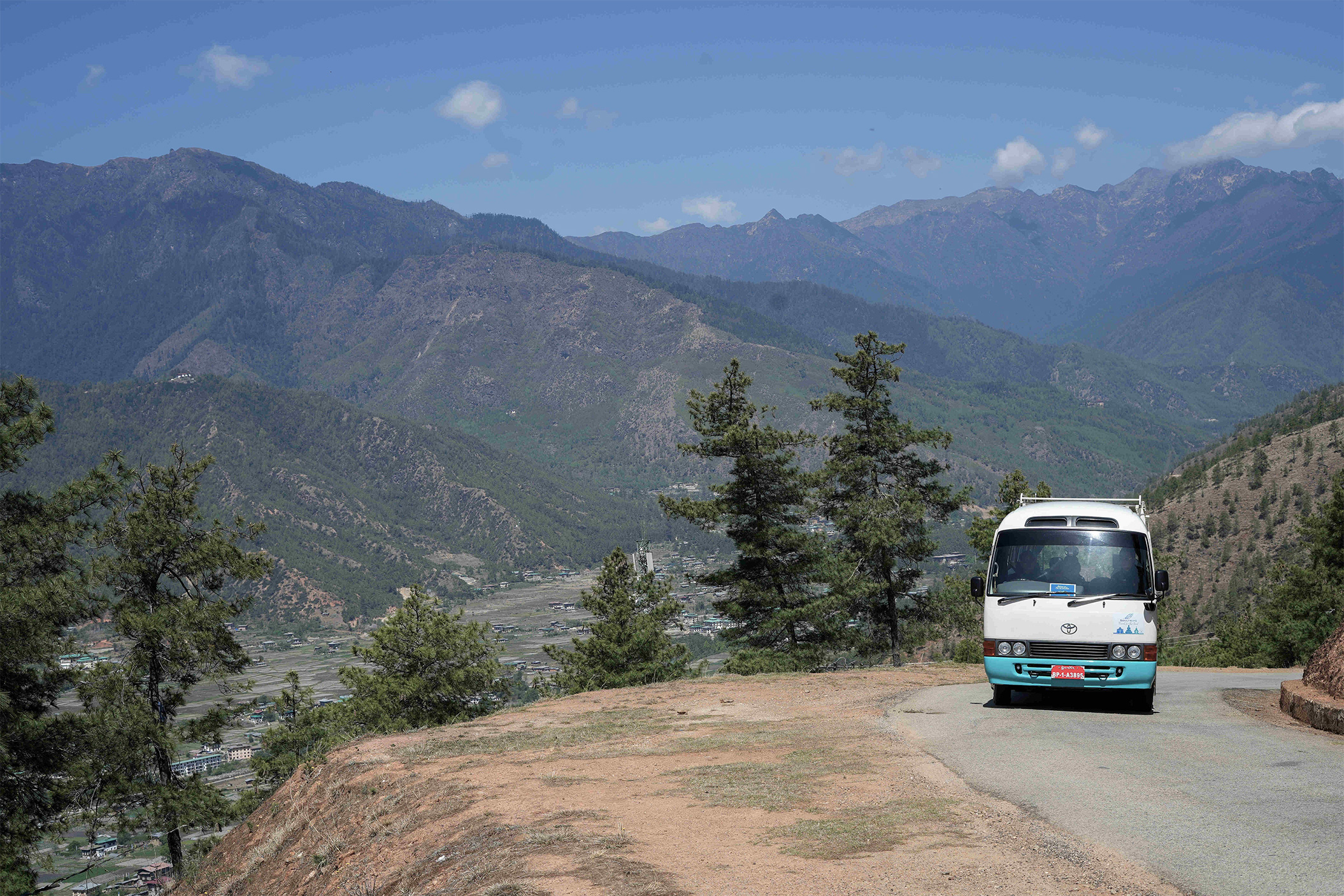
Bhutan is mountainous.
Driving times should therefore be considered carefully when designing the programme.
Avoid creating a schedule where delegates spend most of their time moving between venues and destinations.
For large groups, transportation planning may involve:
A good event programme makes these movements feel effortless to the delegate.
If your event requires sophisticated production, let the organiser know early.
Consider:
MICE Bhutan's existing corporate event services include AV, technical and interpretation coordination.
This is one of the biggest reasons to choose Bhutan.
Don't fly everyone into the Himalayas only to keep them inside a ballroom.
Depending on the group, incorporate experiences such as:
The experiences should reinforce the purpose of the event.
Corporate groups are rarely homogeneous.
Consider:
Build alternatives into physically demanding activities so delegates do not feel excluded.
For a significant corporate event, your planning timeline might look something like this:
9 to 12 Months Before
Confirm objectives, estimated group size, preferred dates and budget.
Begin flight, venue and hotel research.
6 to 9 Months Before
Secure key venues and accommodation.
Develop the programme.
Begin delegate communications.
3 to 6 Months Before
Confirm activities, transportation, dining and technical requirements.
Begin visa and delegate information collection.
1 to 3 Months Before
Finalise rooming lists, dietary requirements, transport manifests, production requirements and delegate schedules.
Final Weeks
Confirm every movement, venue setup, supplier, flight, room allocation and guest requirement.
For very large events, begin earlier.
International corporate events rarely run exactly according to a spreadsheet.
Flights change.
Delegates arrive late.
Weather changes.
Someone needs a different meal.
A speaker changes their presentation.
A vehicle needs to move.
Having a local team that can make decisions quickly is essential.
MICE Bhutan provides venue management, VIP guest relations, accommodation, transportation, flights, visas and on the ground event coordination.
Bhutan can deliver extraordinary corporate events, but the strongest programmes are not created by simply adding meetings to a sightseeing itinerary.
Start with what the organisation needs to achieve.
Then build the venue, destination, experiences and logistics around that objective.
Planning a corporate event in Bhutan? Share your event type, estimated group size, preferred dates and requirements with MICE Bhutan and our team can help you develop the programme.
