
By MICE Bhutan / Posted on 09 September, 2026 15:40
Explore what Bhutan’s Gross National Happiness philosophy can teach boards about ESG, long term value, wellbeing and responsible leadership.
Environmental, social and governance issues now sit firmly on the boardroom agenda.
Companies are setting climate targets, reviewing supply chains, measuring social impact and strengthening governance. Investors and regulators are also asking for clearer information about sustainability risks and opportunities.
Yet many boards still face a more fundamental question. How can an organisation make responsible decisions when financial performance, environmental limits, employee wellbeing, community expectations and long term resilience do not always point in the same direction?
Bhutan’s philosophy of Gross National Happiness offers a valuable perspective.
GNH was created for a country, not a company. It is not an ESG reporting standard and cannot replace the recognised frameworks that organisations may need to follow. Its value to modern boardrooms lies elsewhere.
GNH asks leaders to define progress more broadly, consider how different parts of society affect one another and look beyond immediate economic results. For boards trying to move ESG from a reporting exercise into meaningful decision making, that way of thinking can be remarkably relevant.
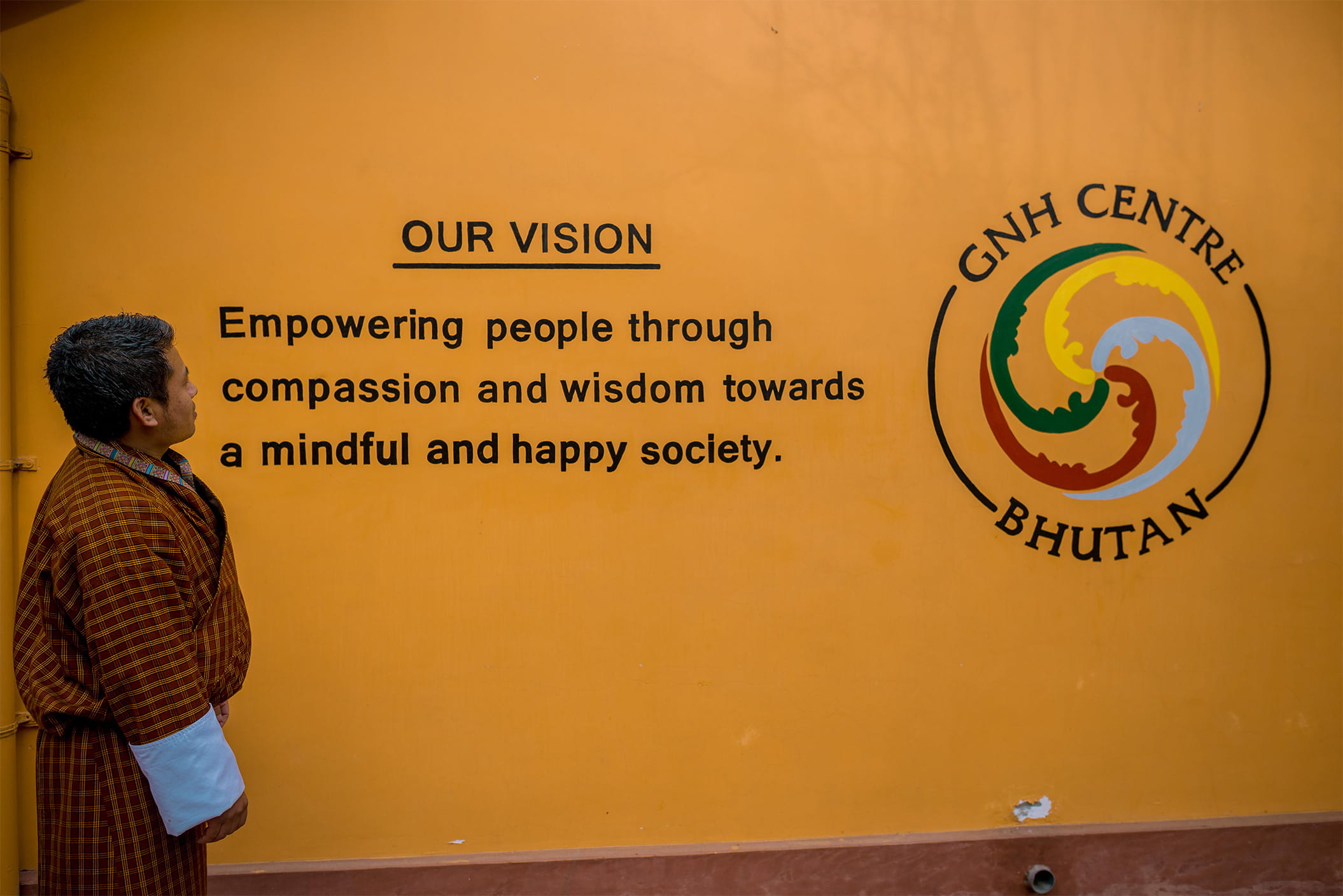
Gross National Happiness is Bhutan’s holistic approach to development. It was introduced by His Majesty the Fourth King Jigme Singye Wangchuck in the early 1970s and is based on the idea that progress should balance material and non material wellbeing.
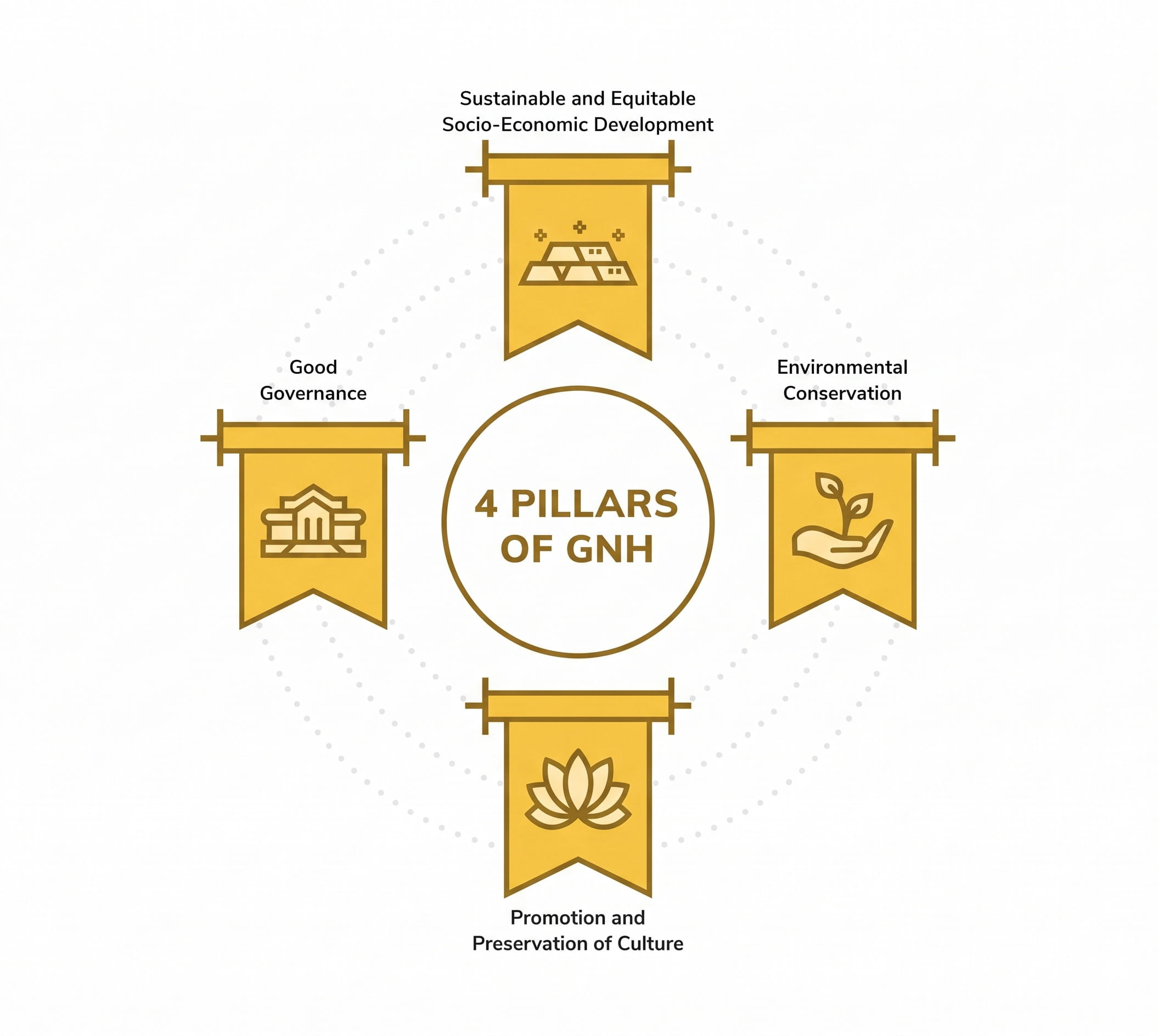
The GNH Centre Bhutan describes GNH as an approach that balances material and non material values. Its four pillars are:
These pillars are further expressed through nine domains:
The domains show that GNH is not simply about asking people if they feel happy. It brings together measurable conditions and lived experience to create a fuller picture of wellbeing and development.
For a board, the immediate lesson is clear. Financial results reveal an important part of organisational health, but they do not reveal the whole picture.
The comparison between GNH and ESG needs to be made carefully.
GNH is a national development philosophy and measurement framework. ESG refers to environmental, social and governance factors that organisations consider in strategy, risk management, operations and disclosure.
Modern sustainability standards have specific purposes. The IFRS Sustainability Disclosure Standards organise disclosure around governance, strategy, risk management, metrics and targets. They help companies communicate sustainability related risks and opportunities that could affect their prospects.
GNH does not replace these requirements. It can, however, enrich the thinking behind them.
ESG frameworks help a company determine what must be governed, managed, measured and disclosed. GNH encourages leaders to ask a wider question: what kind of progress is the organisation trying to create, and for whom?
That distinction can help boards move from compliance to purpose.
Boards often begin an ESG discussion with metrics. They ask what can be measured, reported and compared.
GNH begins earlier. It first considers what a good outcome should look like across economic, social, cultural, environmental and governance dimensions.
This matters because organisations usually improve what they choose to measure. If the board focuses only on financial returns and a small set of environmental indicators, other important effects may remain invisible.
A decision could improve short term revenue while increasing employee burnout. A new facility could create jobs while placing pressure on water, biodiversity or a local community. A cost reduction could improve a quarterly result while weakening trust or organisational resilience.
GNH teaches boards to define value in a broader way before selecting the indicators that represent it.
The question is not only, “What ESG data should we report?”
It is also, “What outcomes do we consider valuable, and what evidence will tell us if we are creating them?”
The four pillars of GNH are designed to work together. Economic development is not rejected, but it is considered alongside governance, culture and the environment.
This idea of balance is highly relevant to corporate strategy.
Boards regularly face competing priorities. Growth may create employment but increase resource use. Technology can improve efficiency but affect jobs, privacy or inclusion. A faster supply chain may reduce costs but increase emissions or supplier pressure.
Responsible leadership does not make these tensions disappear. It brings them into the decision openly.
A GNH inspired boardroom would ask how a proposal performs across several dimensions, where the trade offs lie and whose interests may be overlooked. The goal is not to find a perfect decision. It is to make a more complete one.
This approach also makes ESG more useful. Instead of treating environmental, social and governance matters as separate workstreams, the board considers how they interact with strategy and with each other.

Bhutan’s approach to nature is one of the clearest expressions of GNH.
Environmental conservation is a national priority, and Bhutan’s Constitution requires at least 60 per cent of the country to remain under forest cover for all time. Bhutan also remains carbon negative, with its forests absorbing more greenhouse gases than the country emits.
For a board, the lesson is not that every company can copy Bhutan’s environmental policies. It is that ecological limits need to be treated as part of the decision environment, not as an external issue to address later.
This changes the questions leaders ask.
Instead of asking only how much environmental improvement the current budget can afford, the board can ask what environmental conditions the business depends on, where its operations may be approaching a limit and what needs to change to remain viable in the long term.
This is especially important for industries that depend on stable climates, water, land, natural materials or community consent. Environmental responsibility becomes part of business continuity and value creation, not simply reputation management.
The social element of ESG can become a collection of workforce figures, safety rates and diversity statistics. These measures are important, but GNH suggests a wider view of human wellbeing.
Its domains include health, psychological wellbeing, education, community vitality, cultural resilience and time use.
Time use is particularly thought provoking for modern boards. A company may offer competitive salaries and strong benefits while creating a culture of constant availability, excessive meetings and chronic exhaustion. From a narrow employment perspective, the organisation may appear successful. From a broader wellbeing perspective, the picture can look very different.
GNH encourages leaders to consider the quality of people’s experience as well as the formal conditions around it.
For a company, this could mean looking beyond headcount and turnover to understand workload, trust, learning, belonging, flexibility, psychological safety and the quality of relationships within teams.
It also invites boards to consider the communities around the business. Social value is not limited to what happens inside the organisation. It includes the effects of procurement, investment, land use, supply chains and corporate behaviour on the people connected to the company.

Culture appears explicitly within the GNH framework because Bhutan sees cultural identity as essential to national wellbeing and resilience.
Corporate culture deserves similar attention.
Many organisations describe their values clearly but struggle to recognise the behaviours that contradict them. The board may approve a code of conduct while incentives reward decisions that undermine it. Leaders may speak about collaboration while structures encourage internal competition.
GNH reminds boards that culture is not decorative. It shapes how people interpret priorities, respond to pressure and make decisions when no policy gives them an exact answer.
A strong culture can support ethical judgement, trust and resilience. A weak or contradictory culture can turn ESG commitments into statements that employees and stakeholders do not believe.
Boards can therefore treat culture as something to understand, protect and develop. This includes reviewing leadership behaviour, incentives, promotion decisions and the messages sent when difficult trade offs arise.
Good governance is one of the four pillars of GNH. It also forms the foundation of credible ESG practice.
Environmental and social commitments can only influence the organisation when responsibilities are clear, decisions are challenged and progress is reviewed. Governance determines who owns an issue, what information reaches the board and what happens when results fall short.
The IFRS sustainability standards reflect this importance by placing governance alongside strategy, risk management, metrics and targets.
GNH adds a helpful reminder. Governance should not be judged only by the existence of structures and policies. It should also be considered through the outcomes those structures create for people and the environment.
A board committee may have formal oversight of sustainability, but meaningful governance requires more. Directors need reliable information, relevant expertise, sufficient time and the confidence to question assumptions. Management incentives also need to support the outcomes the organisation says it values.
One of the strengths of the GNH approach is its effort to combine objective conditions with people’s reported experience.
This has an important boardroom parallel.
Dashboards can show employee turnover, absence, safety incidents and engagement scores. They may not explain how it feels to work in a particular team, why people hesitate to speak up or how a company decision affects a local community.
Strong ESG oversight needs both data and dialogue.
Boards can hear from employees, suppliers, community representatives and subject specialists rather than relying only on information that has passed through several management layers. Site visits and direct conversations can reveal patterns that a formal report misses.
This does not mean replacing evidence with anecdotes. It means using lived experience to interpret the evidence more intelligently.
Bhutan’s GNH philosophy is concerned with the wellbeing of present and future generations.
This time horizon can challenge the pace of modern corporate decision making.
Quarterly performance matters, but many ESG risks develop across years. Climate exposure, talent capability, community trust, resource availability and cultural health cannot be managed effectively through short planning cycles alone.
A longer view changes how boards think about investment.
Training may become a capability strategy rather than an immediate cost. Environmental restoration may protect future operations rather than reduce current profit. Strong supplier relationships may create resilience that becomes valuable during disruption.
Long term thinking does not remove the need for present performance. It ensures that today’s results are not achieved by weakening tomorrow’s options.
The principles of GNH can be translated into practical questions for directors and senior leaders.
| GNH perspective | Question for the board | ESG connection |
| Good governance | Do our oversight, incentives and information support the outcomes we claim to value? | Accountability, ethics, controls and transparency |
| Sustainable development | Are we creating economic value in a way that can remain viable over time? | Strategy, resilience and responsible growth |
| Environmental conservation | What natural systems does our business depend on, and where are we creating pressure? | Climate, water, biodiversity and resource use |
| Cultural preservation | What behaviours and values are we protecting through our decisions? | Organisational culture, conduct and stakeholder trust |
| Psychological wellbeing | What is the human experience behind our workforce indicators? | Mental health, engagement and psychological safety |
| Time use | Does the way work is designed support sustainable performance? | Workload, flexibility, productivity and retention |
| Community vitality | How does our activity affect the strength of the communities around us? | Social impact, supply chains and local relationships |
| Education | Are we building the capabilities needed for future risks and opportunities? | Skills, transition readiness and human capital |
These questions do not create an ESG strategy by themselves. They can help a board test if its strategy reflects a broad and realistic understanding of value.
The setting of a board retreat influences the quality of the discussion.
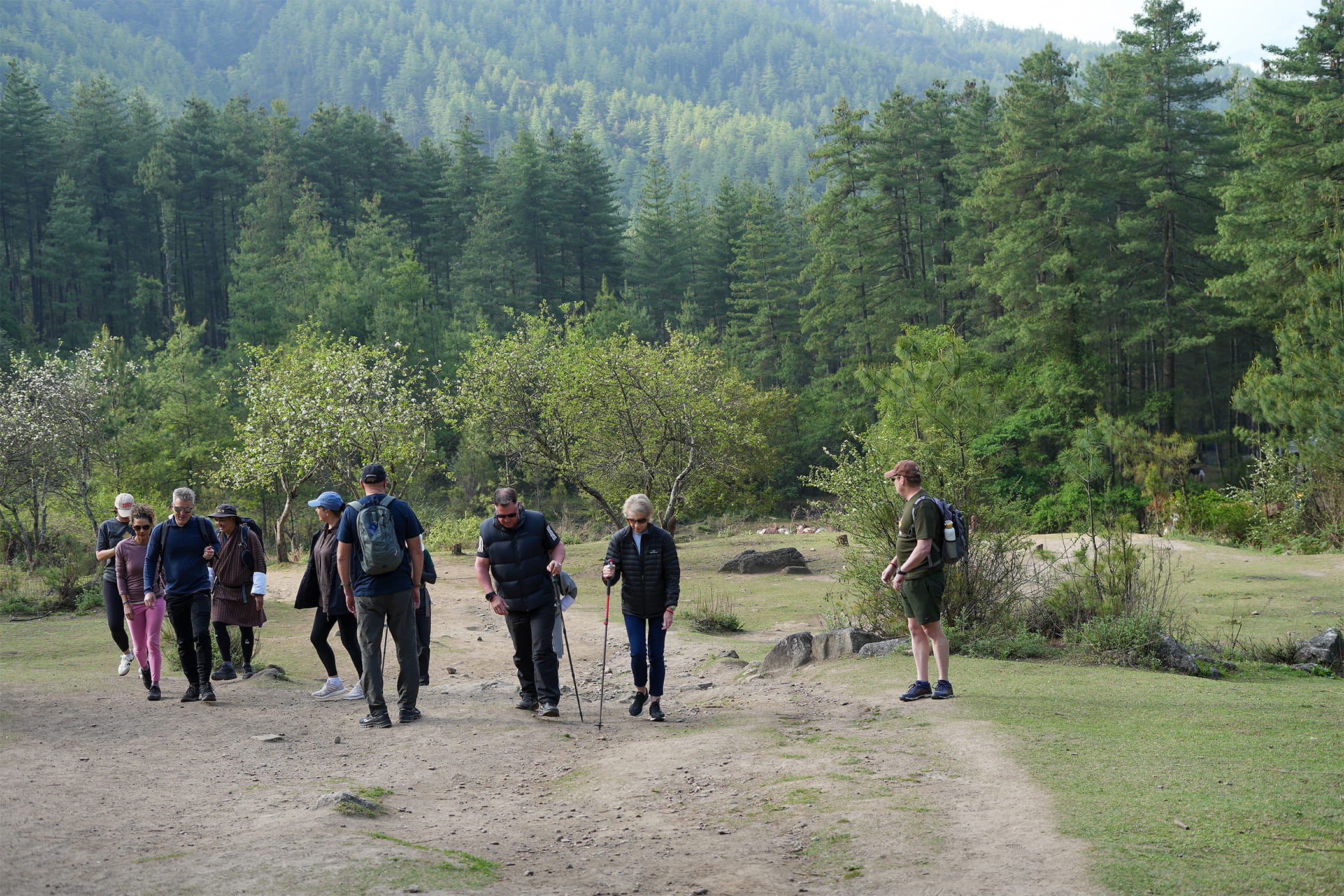
ESG conversations held in a familiar meeting room can easily return to familiar patterns. Bhutan creates distance from daily routines and places leaders in an environment where questions about development, culture, nature and wellbeing are visible in everyday life.
A board can discuss environmental stewardship while looking across protected forests. Leaders can consider cultural resilience after visiting a living monastery or a traditional arts institute. Conversations about wellbeing can take place in a country where psychological health, time use and community vitality are recognised as dimensions of national progress.
The value is not that Bhutan offers simple answers. It gives leaders a different context in which to ask better questions.
At MICE Bhutan, we can design a leadership retreat that brings GNH into the corporate conversation without reducing it to a slogan.
We begin by understanding the organisation’s objectives. A board reviewing climate strategy may need a different programme from a leadership team focused on culture, wellbeing or stakeholder trust.
Depending on the group and the availability of local partners, the programme can include:
We coordinate the hotels, meeting spaces, transport, local speakers, visits, cultural protocol, dining and complete delegate journey. If the organisation already works with an ESG adviser or facilitator, we can integrate that person into the programme and connect the formal sessions with relevant Bhutan experiences.
Our role is not to provide regulatory or reporting advice. We create the environment, local access and operational support that allow the leadership team to explore the issues meaningfully.
A retreat is only valuable if its insights continue after the group returns home.
The final part of a GNH and ESG programme can focus on a small number of practical commitments. These might include a board question to introduce into future investment decisions, a broader wellbeing indicator, a review of incentives or a plan for deeper stakeholder engagement.
The goal is not to copy Bhutan’s national framework and apply it directly to a corporation. It is to identify ideas that can improve the organisation’s own governance and decision making.
Boards can also return to the four broad GNH themes when reviewing a major proposal:
These questions are simple enough to remember and broad enough to expose gaps in a decision.
Modern ESG practice needs rigour. Companies require reliable data, defined responsibilities, recognised standards and honest disclosure.
Bhutan’s GNH philosophy adds something equally important: a reason to look beyond the dashboard.
It reminds leaders that economic performance, human wellbeing, culture, community, governance and the environment are connected. A company can perform strongly in one area while quietly weakening another. Sustainable progress requires the board to see the full system.
That may be the most valuable lesson GNH offers the modern boardroom.
MICE Bhutan can create a board retreat or leadership programme that connects these ideas with Bhutan’s people, institutions, culture and landscapes. Share your group size, leadership objectives and preferred travel period with us, and we will develop a programme that moves the ESG conversation beyond reporting and towards more thoughtful decision making.
