
By MICE Bhutan / Posted on 09 September, 2026 12:18
Learn how MICE Bhutan coordinates coaches, cars, luggage vehicles, airport transfers and road journeys for corporate groups in Bhutan.
Transport rarely receives the same attention as the hotel, meeting venue or gala dinner. Yet for a corporate event in Bhutan, it is one of the most important parts of the delegate experience.
Bhutan is a mountainous country where journeys follow valleys, rivers and high passes. A distance that looks short on a map can take several hours by road. Large coaches may not suit every route or hotel entrance, and passenger vehicles do not always have enough storage for a full group’s luggage.
None of this makes Bhutan unsuitable for corporate events. It simply means that ground transport needs to be designed for the destination.
At MICE Bhutan, we coordinate transport as part of the complete event operation. We assess routes, group size, hotel access, luggage volume, delegate comfort and daily timings before allocating the fleet. From airport arrivals and conference shuttles to VIP cars and journeys between valleys, every movement is connected to the wider programme.
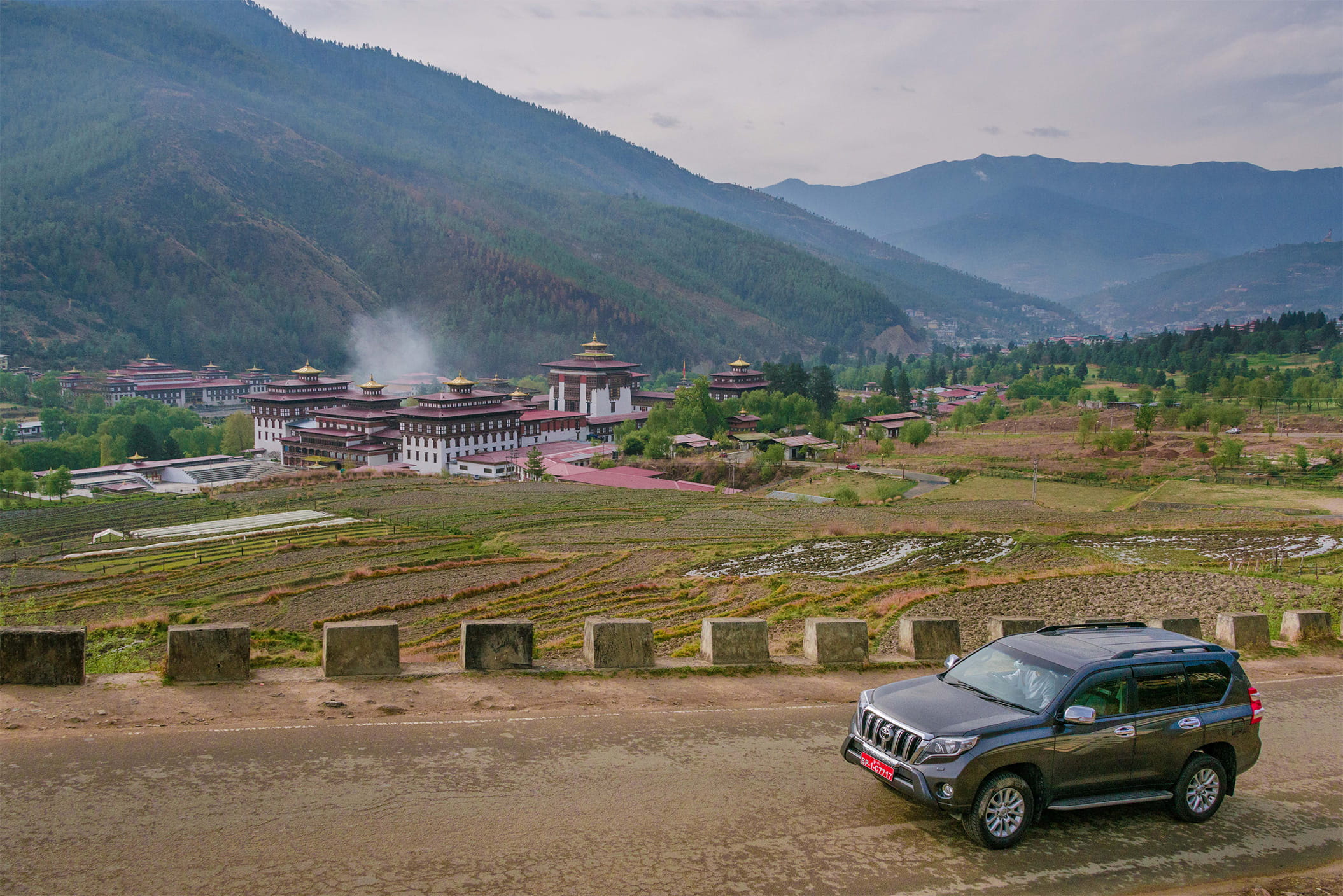
Most international visitors arrive at Paro International Airport. From there, corporate groups travel by road to Paro, Thimphu, Punakha and other parts of western and central Bhutan.
Bhutan’s roads pass through landscapes that are often as memorable as the destinations themselves. Delegates may travel alongside rivers, through pine forests, past villages and across mountain passes marked with prayer flags.
We therefore do not treat every road journey as empty time between activities. Scenic stops, suitable rest points and meals can be included so the transfer becomes part of the experience. At the same time, we keep the schedule realistic. A beautiful drive becomes tiring when too many activities are added before or after it.
The right vehicle depends on more than the number of passengers.
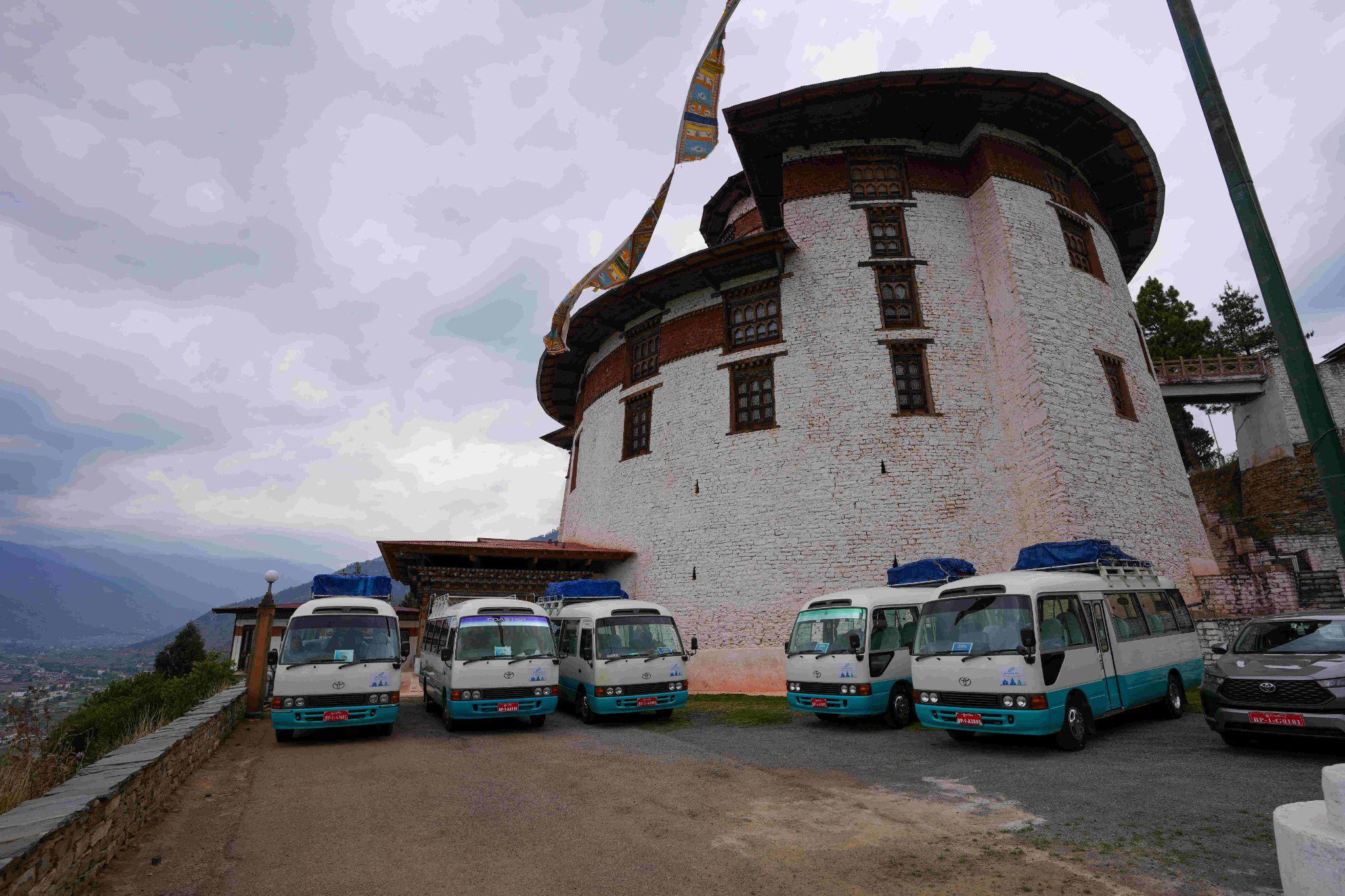
We consider the route, road width, turning space, hotel access, luggage volume and the needs of the group. A large coach may work well for an airport transfer or movement between major hotels and event venues. A smaller bus may be more suitable for a narrow approach road, rural visit or property with limited parking.
For many corporate programmes, the most effective fleet uses a combination of vehicles.
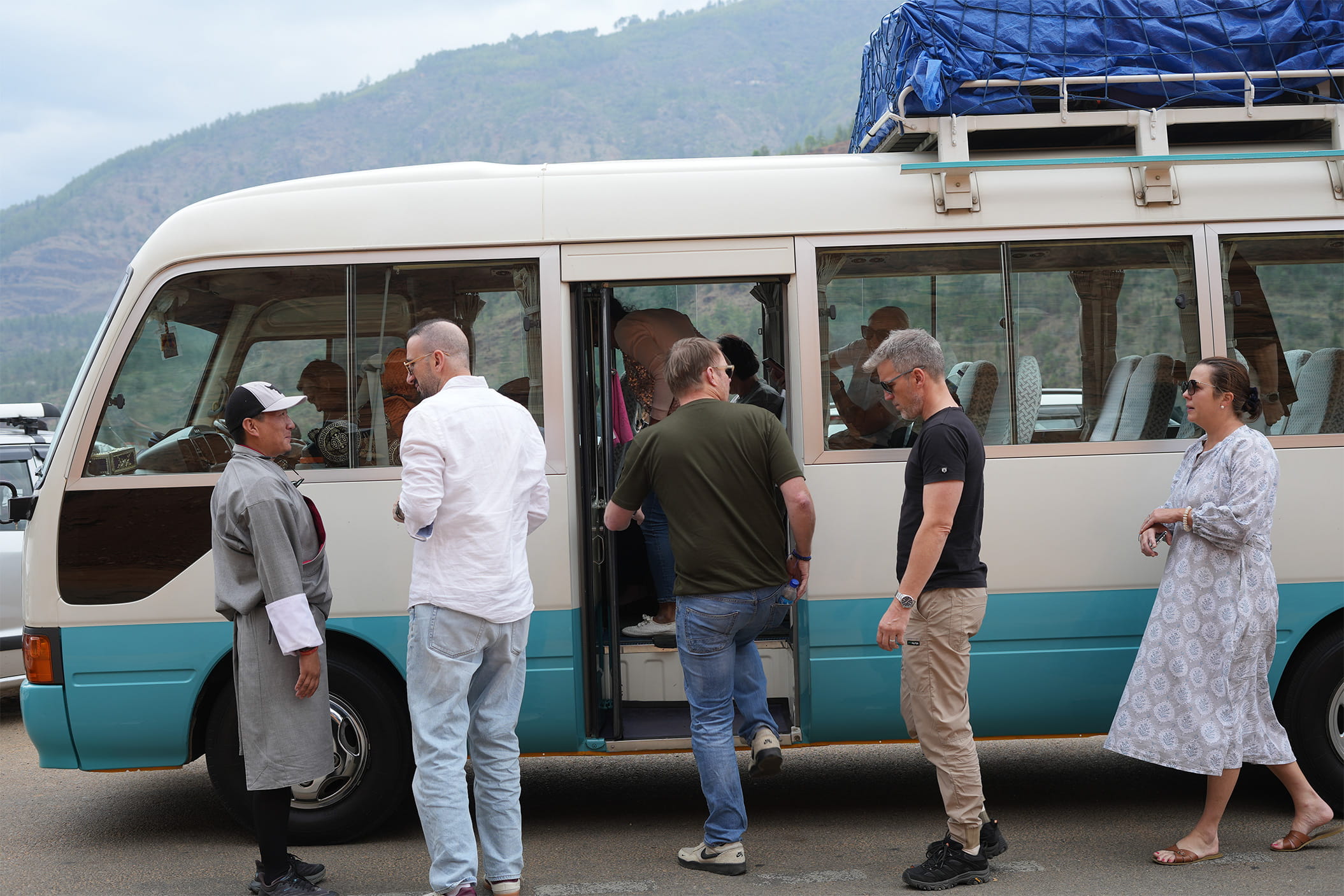
Coaches or smaller buses allow delegates to travel together, which simplifies briefings and creates a shared group experience. They are useful for airport transfers, conference movements, sightseeing and travel between major destinations.
Bhutan does not have the same supply of very large luxury coaches found in major convention cities. Vehicle capacity and quality can also vary. We confirm the actual vehicle type available for the event rather than relying on a generic capacity description.
For larger groups, several smaller coaches may provide a better experience than one very large vehicle. They are often easier to manoeuvre, can reach more venues and give us greater flexibility if the group needs to divide for activities.
Cars and SUVs are commonly used for executives, speakers, hosts and smaller groups. They can also support delegates who need greater privacy, additional comfort or a more flexible schedule.
We may allocate separate vehicles for:
A dedicated vehicle does not always mean it travels separately from the group. It can remain within the convoy while giving selected passengers easier access and more suitable seating.
Passenger capacity and luggage capacity are not the same thing.
A bus may seat the full group comfortably but have limited storage for large suitcases, equipment cases and delegate materials. For this reason, we often allocate a separate luggage vehicle for airport transfers and hotel changes.
This keeps the passenger cabin comfortable and prevents bags from being placed in aisles or on unused seats. It also allows the main group to continue to an activity while the luggage team completes a hotel transfer.
For conferences and product events, separate support vehicles may be required for branding materials, technical equipment, gifts or production cases. These items are recorded independently from personal baggage and delivered to the correct operational contact.
Vehicle planning begins with the programme, not with a standard coach allocation.
We review every movement across the itinerary and identify what each transfer needs to achieve. A morning hotel shuttle has different requirements from a four hour intercity journey. A gala dinner transfer may need several departure waves, while an outdoor activity may require smaller vehicles with suitable clearance.
Our fleet planning considers:
We also leave practical space within the fleet. A vehicle filled to its absolute seating limit gives the operation very little flexibility. Spare seats help with late changes, delegate comfort and staff movements.
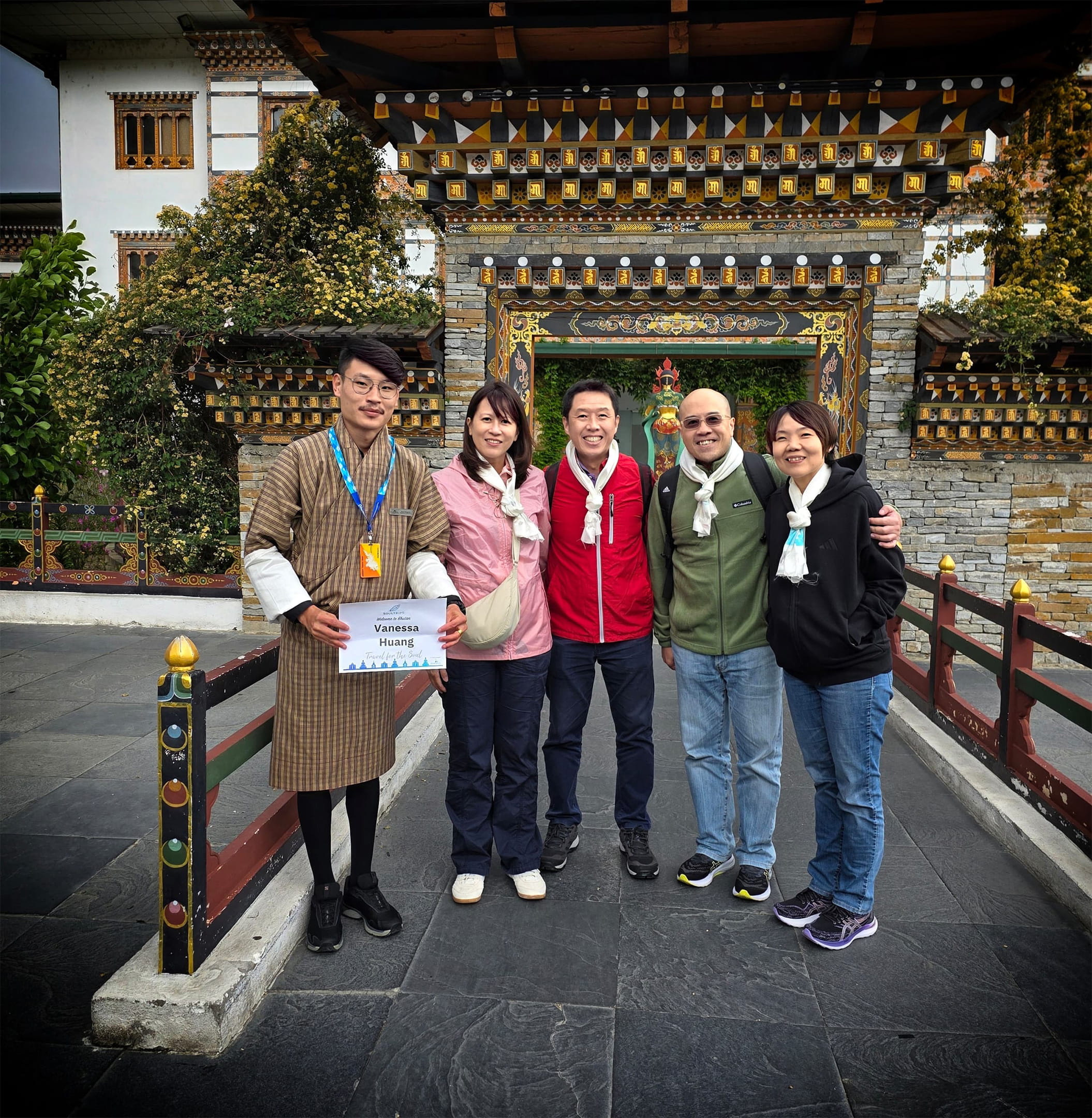
The arrival at Paro International Airport sets the tone for the entire event.
Flight schedules into Bhutan are limited compared with major international hubs, and some groups arrive through more than one regional gateway. Delegates may also be divided across different flights because a single service does not have enough seats for the complete group.
Bhutan’s mountain weather can occasionally affect flight timings. Our arrival operation therefore includes enough flexibility to respond to schedule changes.
MICE Bhutan coordinates:
Delegates are assigned to vehicles according to their hotel, group or programme. For larger events, a dispatch lead releases each vehicle only after the passenger manifest and luggage count have been checked.
If guests arrive in different waves, we can arrange holding plans, additional airport staff and staggered hotel transfers. This avoids keeping the first arrivals waiting unnecessarily for a later flight.
Luggage is one of the most common sources of delay during group movements.
Before arrival, we ask for an estimated number of suitcases per delegate and details of any unusual items. Golf bags, camera cases, exhibition materials and large corporate gifts can affect the type and number of vehicles required.
For substantial groups, luggage tags can identify the delegate, hotel, room allocation or coach group. Bags are counted when loaded and checked again at the destination. A member of the event team supervises the luggage vehicle rather than leaving the transfer entirely to the driver.
During a hotel change, luggage can be collected separately and delivered to the next property while delegates attend a meeting or activity. The hotel rooming list and baggage record help the team place or release bags correctly.
Departure day requires the same level of attention. Collection times are communicated clearly, hotel teams are briefed and final counts are completed before the vehicles leave for the airport.
This separate luggage operation is especially valuable in Bhutan, where vehicle storage can be limited and hotel entrances may not accommodate several vehicles at the same time.
Road distance alone does not provide a reliable picture of travel time in Bhutan.
The roads curve through mountainous terrain, and conditions can change with weather, maintenance work and local traffic. Journey times also need to account for comfort stops, meals, scenic viewpoints and group boarding.
The timings below provide a general planning reference. We reconfirm them for each event based on the route and current conditions.
| Typical journey | Indicative driving time | Transport considerations |
| Paro Airport to a Paro hotel | 15 to 30 minutes | Hotel location and luggage loading affect the total transfer time |
| Paro Airport to Thimphu | 1 hour 15 minutes to 1 hour 30 minutes | Suitable for coaches and cars, with extra time for large group dispatch |
| Thimphu to Punakha | 2 hours 30 minutes to 3 hours | Usually includes the high mountain crossing at Dochula Pass |
| Punakha to Paro | 3 hours 30 minutes to 4 hours | A comfort and meal stop may be added for groups |
| Thimphu to Gangtey | 4 to 5 hours | Smaller vehicles may suit some programme and hotel arrangements |
| Gangtey to Bumthang | 5 to 6 hours | A full travel day requires planned meals, rest stops and conservative timing |
These are driving estimates rather than guaranteed transfer times. For an event programme, we add time for assembling the group, loading vehicles and moving through hotel entrances.
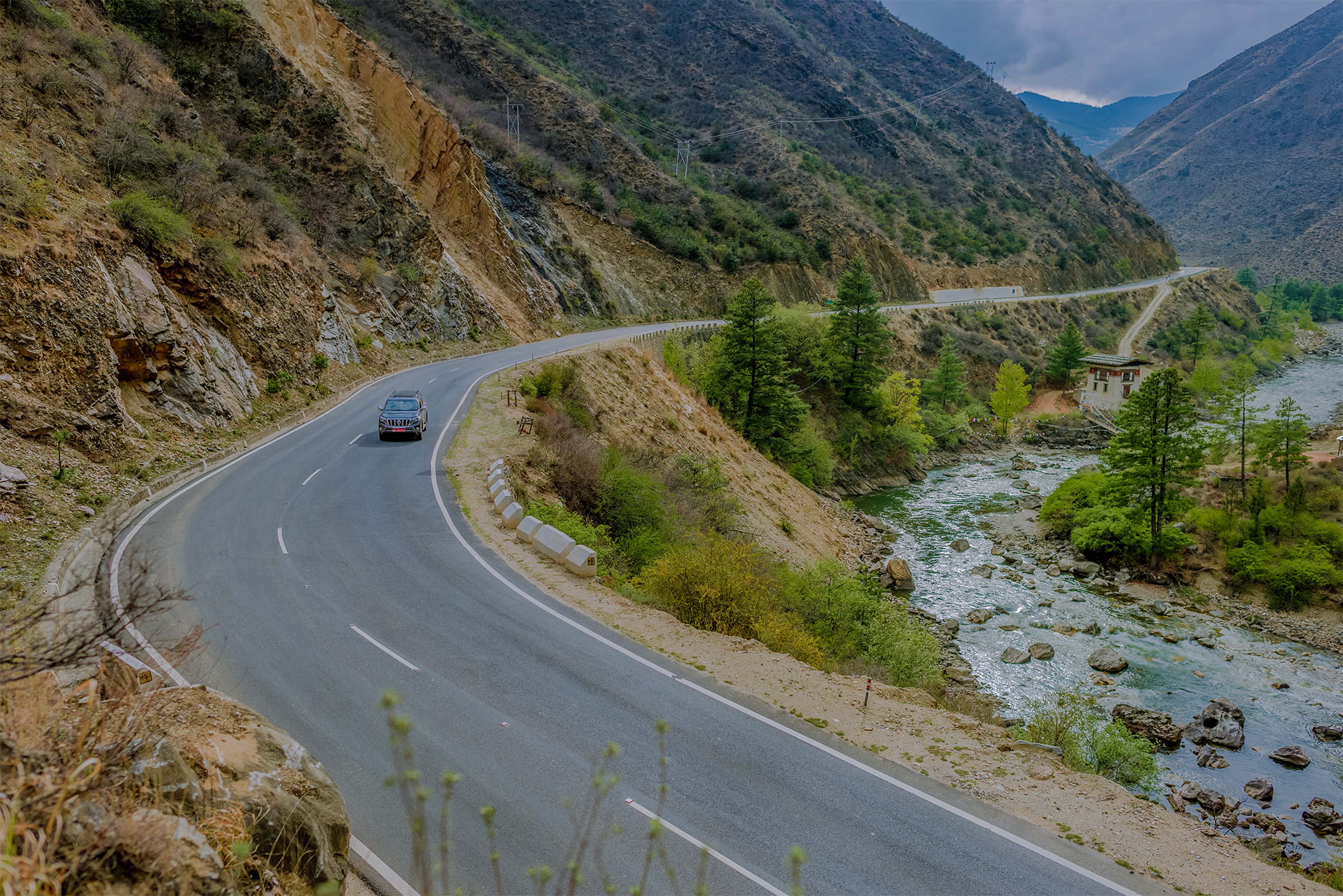
Some of Bhutan’s most rewarding destinations require longer drives. Gangtey offers wide glacial valley landscapes, while Bumthang brings groups deeper into Bhutan’s spiritual and cultural heartland.
These journeys can work very well for incentive groups and retreats when the programme gives them enough space.
For longer transfers, MICE Bhutan can coordinate:
Some delegates may be sensitive to winding roads. We can reserve forward seats when requested and brief the group before departure so guests can prepare any personal medication they normally use.
Heavy meals immediately before a long mountain journey are usually avoided. We can work with hotels to provide a lighter menu and carry suitable refreshments for the road.
Not every transport movement involves a long journey.
Corporate events may require regular shuttles between several hotels and one conference venue. Gala dinners, cultural performances and private events can also finish at different times for guests, staff and production teams.
We design these movements around the actual flow of the event. This may involve scheduled hotel departures, several shuttle loops or vehicles held on standby for speakers and VIPs.
For evening functions, the transport plan includes the final guest departure, not only the advertised event end time. A small number of vehicles may remain available for delegates who leave early, while the main fleet returns at the close of the programme.
Drivers, guides and venue contacts receive the same transport schedule. Each vehicle is assigned a number or name, and guests are told where to board. For groups staying at several hotels, signage and delegate communication reduce confusion at the end of the evening.
Several coaches moving together require active coordination.
For larger events, each vehicle can have a guide, staff member or vehicle captain responsible for the passenger count, schedule and communication with the transport lead. The captain confirms that the correct delegates are on board and reports when the vehicle is ready to leave.
Vehicles are numbered clearly and matched to a manifest. This can be organised by hotel, department, language group, activity or arrival wave.
The full fleet does not always need to move in a tight line. On mountain roads, a convoy may separate naturally. Drivers and captains therefore work from agreed stops and arrival points rather than relying only on visual contact with the vehicle ahead.
For complex movements, our operations team maintains live communication with guides, drivers, hotels and event contacts. If a delegate boards the wrong vehicle or a departure is delayed, the information can be resolved before it affects the next part of the programme.
VIP transport is planned as part of the full event operation rather than as a separate last minute request.
Senior executives, keynote speakers and official guests may need private airport transfers, additional luggage space, separate hotel access or direct travel to a meeting. Their schedules may also change independently of the main group.
MICE Bhutan can provide dedicated cars, assigned drivers, meet and greet staff and a single operational contact for these guests. The vehicle schedule is coordinated with hotel rooms, event timings, protocol requirements and flight information.
Privacy and punctuality remain important, but the plan also accounts for Bhutan’s road conditions. Departure times are based on realistic travel rather than city transport assumptions.
Bhutan’s terrain, heritage sites and vehicle supply can create challenges for delegates with limited mobility.
Accessible transport needs to be discussed early so we can identify the most suitable available vehicle and confirm access at each venue. Not every coach, hotel or cultural site has the same facilities.
Depending on the delegate’s needs, we can arrange easier vehicle access, additional boarding time, forward seating, a private car, fewer vehicle changes and shorter walking distances from the drop off point.
We also coordinate the transport plan with the hotel and activity schedule. A suitable vehicle is only one part of accessibility. Entrances, steps, paths, toilets and seating at the destination must also be considered.
Transport safety begins with realistic scheduling.
We avoid building itineraries that depend on rushed driving or extremely tight connections. Where possible, longer intercity journeys are planned during daylight, with time allowed for rest stops and changing conditions.
Vehicles and drivers are selected through trusted local transport partners. Before the programme, we confirm the assigned fleet, driver contacts and operating schedule.
The contingency plan may include a spare vehicle, additional transfer time, alternative routing, revised meal arrangements and direct communication with hotels or venues. For a large group, one operational change can affect several parts of the programme, so decisions are coordinated centrally.
The right transport plan can reduce unnecessary vehicle use without compromising comfort.
We consolidate airport transfers where flight timings allow, select vehicles that suit the actual group size and reduce empty journeys through coordinated dispatch. For conferences, a well designed shuttle schedule may use fewer vehicles than assigning a car to every delegate.
Sustainability also needs to be balanced with operational reality. An undersized fleet can create overcrowding, luggage problems and repeated journeys. The most responsible solution is the one that moves the group safely and efficiently with appropriate capacity.
Corporate transport in Bhutan is not simply a vehicle booking. It is a connected operation involving flights, hotels, luggage, venues, activities, delegates and staff.
MICE Bhutan can coordinate:
Our team works from one central movement schedule so that transport remains aligned with the event programme. Changes are communicated across the relevant drivers, guides, hotels and venue teams.
Bhutan’s geography gives the destination much of its beauty, but it also means that transport deserves serious attention.
The right vehicle needs to fit the road, venue and luggage load. Journey times need to reflect mountain conditions. Delegates need clear information, and every transfer needs to connect with the hotel, meal, meeting or activity that follows.
When these details are coordinated well, the transport becomes almost invisible. Guests simply find the correct vehicle, travel in comfort and arrive where they need to be at the right time.
At MICE Bhutan, that is exactly what we aim to deliver. We manage the movements behind the event so your delegates can focus on the experience, the conversations and the reason they came to Bhutan.
Planning a conference, incentive trip or corporate group journey in Bhutan? Share your group size, route, dates and transport requirements with us, and we will build a ground movement plan around your complete programme.
